Swepsonville is one of the smallest towns in Alamance County, and its position along the Haw River corridor means its residential properties sit on some of the most moisture-affected ground in the region. The Haw River and its associated floodplain soils create persistent ground moisture conditions that smaller, more isolated communities away from major waterways do not face to the same degree. For Swepsonville homes, especially those built before modern vapor barrier requirements, that moisture has had unimpeded access to crawl space framing for decades. The structural consequences of that long exposure are exactly what professional crawl space encapsulation is designed to address.
Neuse Termite and Pest Control serves Swepsonville from our Burlington location at 3671 Alamance Rd, providing professional crawl space encapsulation and moisture control backed by more than 320 years of combined experience across Central NC.
Why Crawl Space Moisture Is a Serious Concern in Swepsonville
River Corridor Soil Conditions
Swepsonville's proximity to the Haw River places it within the waterway's zone of hydrological influence. Floodplain and near-floodplain soils throughout this corridor maintain elevated moisture levels long after individual rain events, because the water table and drainage patterns of the entire watershed sustain saturation in the underlying clay. That continuous ground moisture creates a persistent vapor pressure beneath every crawl space in the area, one that does not resolve between rains and does not decrease significantly during dry summers.
Decades of Moisture Exposure in Older Homes
Swepsonville's residential stock largely reflects the construction era of a small textile-era piedmont community. These homes were built without the vapor barrier requirements, treated lumber standards, and foundation clearance guidelines that exist in modern construction. Wood framing in older Swepsonville crawl spaces has in many cases been subject to moisture cycling for fifty years or more. That sustained exposure accumulates as elevated wood moisture content, fungal growth, and the kind of gradual structural deterioration that does not announce itself until it is well advanced.
Foundation Vents and the Humidity Problem
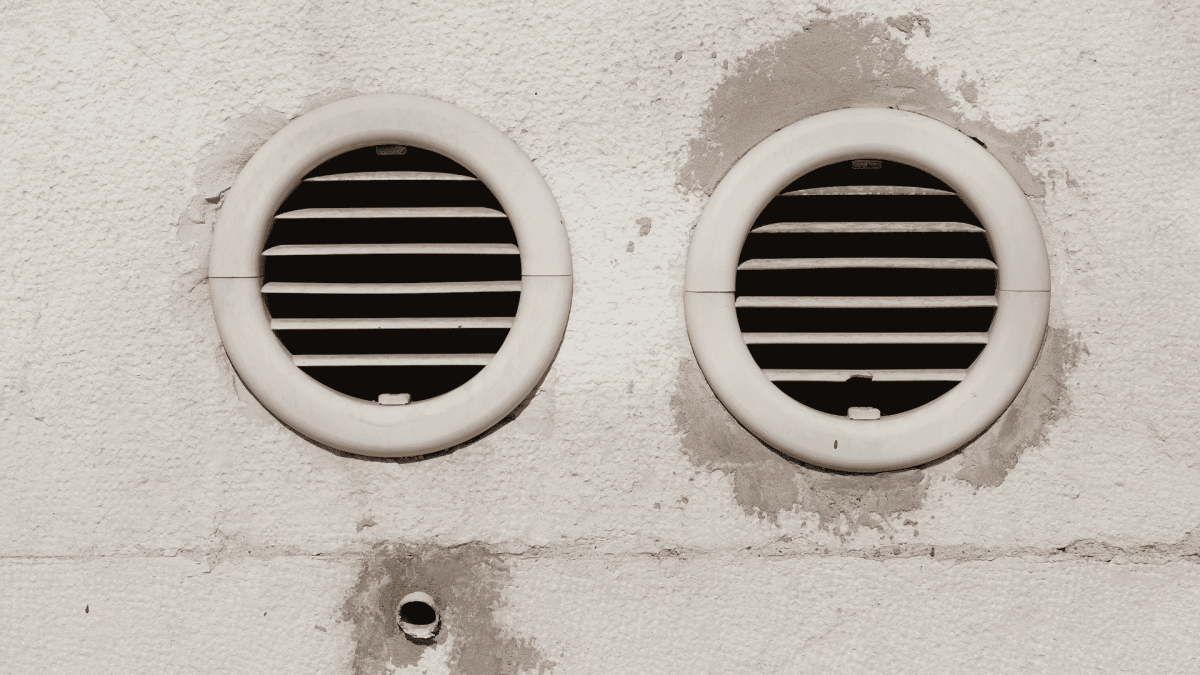
Traditional foundation vents were intended to allow natural airflow to dry the crawl space. In a river corridor community like Swepsonville, where outdoor relative humidity is elevated by the waterway throughout the warm months, those vents import more moisture than they remove. Warm, saturated outdoor air enters the crawl space, condenses on cooler interior surfaces, and adds to the moisture load already rising from the ground. Encapsulation seals those vents and replaces passive airflow with active humidity control, which is the only approach that works reliably in this kind of environment.
Drainage Features and Low-Lying Lots
The terrain shaped by the Haw River corridor includes residential properties that sit in low-lying positions where water collects after rain. For these homes, the moisture challenge is not just soil vapor; it can include active water intrusion that a vapor barrier alone does not address. An inspection identifies whether your property has drainage conditions that require a sump pump or drainage channel as a first step before encapsulation materials are installed.
What Full Crawl Space Encapsulation Includes
Heavy-Duty Vapor Barrier
A reinforced liner covers the full crawl space floor and extends up the foundation walls and over all piers, creating the primary barrier against rising ground vapor.
Termite-Resistant Insulation Board
Rigid insulation board is installed on the crawl space walls on top of the vapor barrier, providing thermal separation using materials that do not attract or support termites.
Sealed Foundation Vents
All existing foundation vents to the outside are sealed, eliminating the primary pathway for humid outdoor air.
Required Dehumidifier
Sealing the foundation vents creates a closed crawl space, and building code requires a mechanical source of circulating air in that condition. A crawl space-rated dehumidifier fulfills that requirement and is a built-in component of full encapsulation. It actively maintains relative humidity at safe levels year-round. Learn more about Neuse's crawl space dehumidification services.
Drainage Systems Where Needed
For Swepsonville homes where drainage features, low lot positions, or high water table conditions create active water intrusion, a sump pump or interior drainage system is incorporated before the vapor barrier is installed.
Benefect Disinfectant Application
Where mold or fungal growth has developed, Neuse applies Benefect to affected surfaces before encapsulation materials are installed, ensuring the sealed space starts clean.
Crawl Space Moisture and Pest Risk in Swepsonville
The same conditions that create crawl space moisture problems in Swepsonville also attract pests. Moisture-softened wood is the primary attractant for subterranean termites, and the Haw River corridor's soil conditions sustain active termite colonies throughout the year. Resolving crawl space moisture removes one of the key structural conditions that draws termite activity toward foundations. Neuse offers termite treatment services for Swepsonville homeowners dealing with both concerns through a single provider. Read more about how proper crawl space encapsulation prevents pest infestations.
Signs Your Swepsonville Home Needs Crawl Space Attention
- Persistent musty or earthy odors on the first floor or near floor level
- Flooring that is buckling, cupping, warping, or has developed soft or spongy spots
- Indoor humidity that stays elevated even during dry stretches of weather
- Worsening allergy or respiratory symptoms without another clear explanation
- Visible mold, discoloration, or moisture on lower walls or baseboards
- Higher-than-expected energy costs for your home's size and age
- Visible moisture, standing water, or deteriorated wood framing in the crawl space
Frequently Asked Questions About Crawl Space Encapsulation in Swepsonville
Can I start with just a dehumidifier instead of full encapsulation?
Yes, and it is sometimes the right first step. A crawl space dehumidifier actively pulls moisture out of wood that has already absorbed it, doing work that a vapor barrier alone cannot. For Swepsonville homes where wood moisture content in the floor framing is already elevated from years of river corridor exposure, a dehumidifier may be the most direct initial solution. Some homes benefit from a dehumidifier without immediate full encapsulation; others need both. The inspection determines which approach your specific home requires. See our dehumidification services for more.
Is a dehumidifier required with full encapsulation?
Yes. When foundation vents are sealed, building code requires a mechanical source of circulating air. A crawl space-rated dehumidifier fulfills that requirement and is a built-in part of any complete encapsulation system.
What if my crawl space has standing water?
Standing water or active water intrusion must be addressed before the vapor barrier is installed. Depending on the source, a sump pump or interior drainage system is incorporated first. Your inspection identifies whether this condition is present and what the appropriate sequence of work looks like for your specific home.
How long does installation take?
Most Swepsonville crawl spaces are encapsulated in one to two days. Your inspection will include a specific timeline estimate before any commitment is made.
Will this help with indoor air quality?
Yes. A significant portion of the air in your home moves upward from the crawl space below. Mold spores, musty odors, and excess humidity in a damp, unmanaged crawl space become indoor air quality issues throughout the home. Encapsulation breaks that connection.
Schedule Crawl Space Encapsulation in Swepsonville, NC
Neuse serves Swepsonville from our Burlington location at 3671 Alamance Rd. Contact us today to schedule your crawl space inspection.
Call our Burlington office at (336) 948-1734, or reach us online at the link above.

