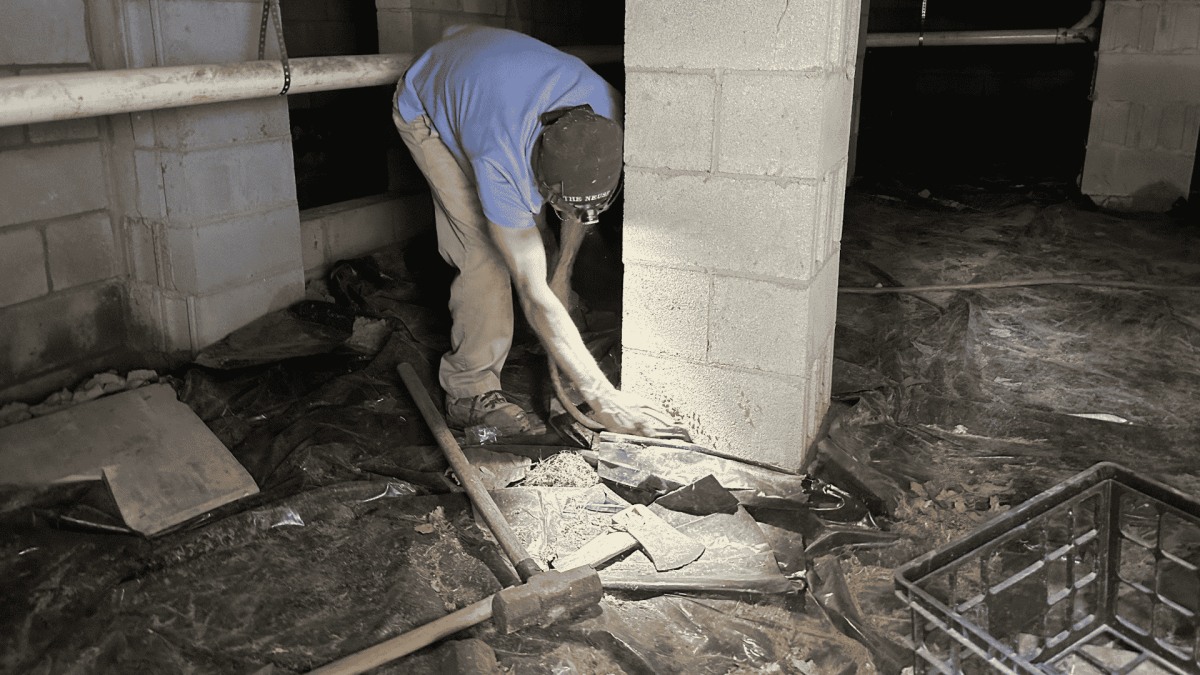
Gibsonville's older residential neighborhoods share a characteristic that is common throughout the piedmont towns between Burlington and Greensboro: crawl space foundations built to the standards of their era, which rarely included adequate moisture management by today's understanding of how NC's climate affects these spaces. Combined with Alamance and Guilford counties' clay-heavy soils and the creek drainages that carry moisture through the area, crawl spaces in Gibsonville tend to accumulate moisture problems steadily and silently over time.
Neuse Termite and Pest Control serves Gibsonville from our Burlington location at 3671 Alamance Rd, providing professional crawl space encapsulation and moisture control backed by a 5-star rating from over 2,000 customers and more than 320 years of combined experience across Central NC.
Why Gibsonville Crawl Spaces Develop Moisture Problems
Several factors specific to Gibsonville's geography and housing stock create the crawl space moisture conditions that homeowners here encounter.
Clay Soils Across Both Counties
Gibsonville's position straddling Alamance and Guilford counties places it squarely in the piedmont clay zone. Clay retains water exceptionally well, meaning soil beneath and around homes stays saturated significantly longer after rain events than in sandier coastal soils. Ground vapor rises continuously from that saturated clay into any crawl space without an effective barrier. This is not a seasonal problem; it persists throughout most of the year.
Creek Drainages and Low-Lying Areas
Seasonal creek corridors and drainage features throughout Gibsonville carry additional water toward low-lying residential areas. Properties near any drainage feature, even modest ones, tend to see elevated ground moisture pressure that a basic vapor barrier alone may not fully address.
Foundation Vents and NC Humidity
Traditional foundation vents were designed to allow airflow and natural drying of the crawl space. In North Carolina's humid climate, the opposite frequently happens. During summer months, warm outdoor air carrying high relative humidity enters the crawl space and condenses on the cooler interior surfaces. The space grows wetter from the vents rather than drying through them. Encapsulation seals those vents and replaces passive airflow with active, mechanical humidity control.
Older Construction Without Vapor Management
Gibsonville's established homes frequently lack the vapor barrier coverage that current construction requires. Bare soil crawl space floors, limited clearance between the ground and floor framing, and original construction that predated modern moisture standards create conditions where ground vapor has had unimpeded access to wood framing for decades.
What Full Crawl Space Encapsulation Includes
Heavy-Duty Vapor Barrier
A reinforced liner covers the full crawl space floor and extends up the foundation walls and over all piers, creating the primary barrier against rising ground vapor.
Termite-Resistant Insulation Board
Rigid insulation board is installed on the crawl space walls on top of the vapor barrier, providing thermal separation using materials that do not harbor or attract termites.
Sealed Foundation Vents
All existing foundation vents to the outside are sealed, eliminating the primary pathway for humid outdoor air intrusion.
Required Dehumidifier
Sealing the foundation vents creates a closed crawl space, and building code requires a mechanical source of circulating air in that condition. A crawl space-rated dehumidifier is that required component. It actively maintains relative humidity at safe levels year-round and is a built-in part of full encapsulation, not an optional upgrade. Learn more about Neuse's crawl space dehumidification services.
Drainage Systems Where Needed
For Gibsonville homes with standing water or active water intrusion from adjacent drainage features, a sump pump or interior drainage channel is incorporated before the vapor barrier is installed.
Benefect Disinfectant Application
Where mold or fungal growth has developed, Neuse applies Benefect, a hospital-grade disinfectant, to affected surfaces before encapsulation materials are installed.
The Moisture and Pest Connection
Damp crawl spaces attract subterranean termites, wood-destroying beetles, centipedes, and rodents. Moisture-softened wood is among the primary conditions that draw termite colonies toward residential structures. Addressing crawl space moisture removes one of the key attractants for pest activity at the foundation level. Neuse offers termite treatment services for Gibsonville homeowners who want to address both concerns through a single provider.
Signs Your Gibsonville Home May Need Encapsulation
- Persistent musty or earthy odors on the first floor or near floor level
- Flooring that is buckling, cupping, warping, or has developed soft spots
- Indoor humidity that stays elevated even during dry weather
- Worsening allergy or respiratory symptoms without another explanation
- Visible mold, mildew, or discoloration on lower walls or baseboards
- Energy costs higher than expected for your home's age and size
- Visible moisture or wood deterioration in the crawl space
Frequently Asked Questions About Crawl Space Encapsulation in Gibsonville
Can I start with just a dehumidifier instead of full encapsulation?
Yes, and it may be the right first step. A crawl space dehumidifier actively pulls moisture out of wood that has already absorbed it, doing work that a vapor barrier cannot. If wood moisture content in your floor framing is already elevated, a dehumidifier can be the most direct initial solution. Some Gibsonville homes benefit from a dehumidifier alone; others need both for lasting results. The inspection determines which approach your specific home requires. See our dehumidification services for more.
Is a dehumidifier required with full encapsulation?
Yes. When foundation vents are sealed, building code requires a mechanical source of circulating air. A crawl space-rated dehumidifier fulfills that requirement and is a built-in component of any complete encapsulation system.
My crawl space has never been inspected. Where do I start?
With a professional inspection. It measures actual wood moisture content, identifies moisture sources, checks for any existing mold or pest activity, and tells you exactly what your crawl space needs before any commitment is made. Contact us to schedule one.
How long does encapsulation take to install?
Most Gibsonville crawl spaces are encapsulated in one to two days depending on size and conditions. Your inspection will include a specific timeline estimate.
Will this help with my energy bills?
Often, yes. A damp, unmanaged crawl space places additional humidity load on your HVAC system. Sealing and conditioning the space reduces that burden and can produce measurable improvement in heating and cooling efficiency.
Schedule Crawl Space Encapsulation in Gibsonville, NC
Neuse Termite and Pest Control serves Gibsonville from our Burlington location at 3671 Alamance Rd. Contact us online today or call us at (336) 948-1734 to schedule your crawl space inspection.

