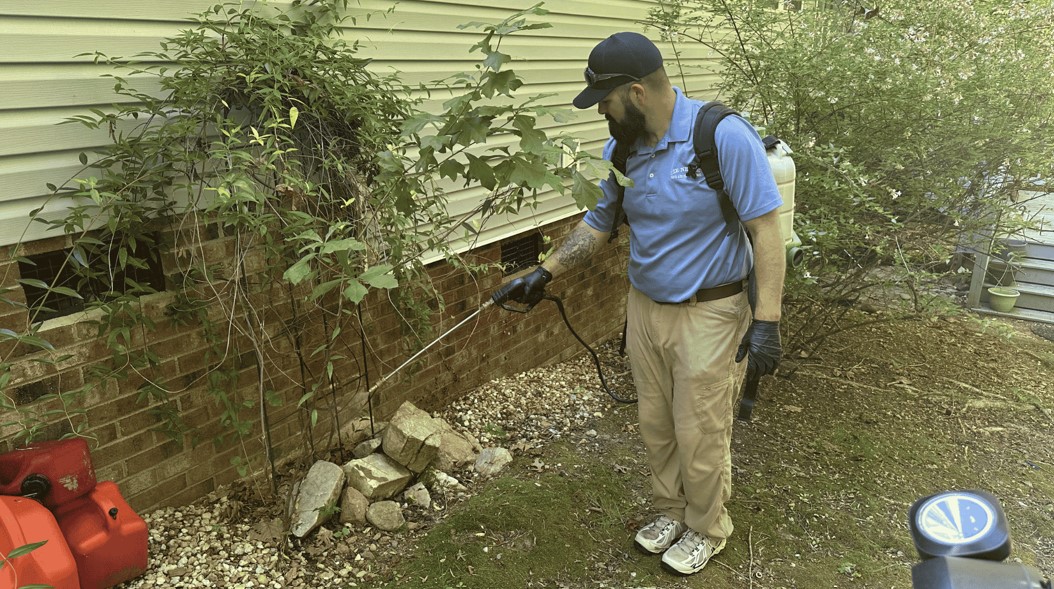
If you own an older home in Durham, the crawl space beneath it has likely been breathing damp air for decades. That moisture quietly weakens framing, feeds pests, and works its way into the living space above. Crawl space encapsulation in Durham, NC seals the space off from ground moisture and humid air so your home stays dry, protected, and comfortable. To have your crawl space evaluated, contact Neuse Termite and Pest Control today.
Why Older Durham Homes Are Especially Vulnerable to Crawl Space Moisture
Durham's character comes from its older neighborhoods. Trinity Park and Watts-Hillandale are full of early-1900s bungalows and Colonials, Forest Hills took shape between the 1920s and 1940s, and Hope Valley grew up around the city's first country club in the late 1920s. Many of these homes sit on raised crawl space foundations built long before anyone designed for vapor barriers or sealed conditioning.
A crawl space from that era was meant to vent to the outside, on the theory that circulating air would keep it dry. In our humid Piedmont climate, the opposite happens. Warm, moist air flows in through the foundation vents, condenses on cooler framing and ductwork, and leaves the original wood damp for much of the year. After decades of this cycle, the structural wood in an older Durham home has absorbed far more moisture than it ever should.
The local ground makes it worse. Durham's heavy red clay holds water near the foundation instead of draining it away, and homes in lower-lying pockets near Ellerbee Creek or the Eno River corridor contend with even more groundwater. Sealing the crawl space stops the moisture at its source rather than fighting it season after season.
What We Often Find Beneath Older Durham Homes
When we inspect an older crawl space in Durham, a few problems appear again and again:
- Insulation that has absorbed moisture, sagged, and pulled away from the subfloor
- Original floor joists and beams showing surface mold or early wood decay
- Standing water or saturated soil after seasonal rain
- Mud tubes or other signs of termite activity in wood left vulnerable by moisture
- Musty air that rises into the living space and affects comfort and odor
Finding these early is what separates a manageable encapsulation from a costly structural repair later on.
How We Encapsulate an Older Durham Crawl Space
Sealing a crawl space that has been damp for decades takes more than rolling out plastic. Our process is built around restoring and protecting an older home.
Assessing and Clearing the Space
We begin by evaluating the condition of the existing wood, removing moisture-damaged insulation, and addressing any active pest activity before we seal anything in. In an older home, this step often uncovers issues the owner never knew were there.
Vapor Barrier and Sealing
We cover the soil and walls with a heavy-duty vapor barrier and seal the foundation vents that have been letting humid air in for years. This turns a chronically damp space into a clean, dry, enclosed one.
Dehumidification
Once the vents are sealed, the crawl space no longer ventilates on its own. Building code requires a dehumidifier or similar conditioning system to manage humidity in the closed space, and it is what keeps the area dry going forward. Our dehumidification page explains the details.
Termite-Resistant Insulation Board
We install termite-resistant insulation board up the crawl space walls over the vapor barrier, adding thermal protection without giving wood-destroying pests a path into the home's original framing.
Drainage for Low-Lying Lots
For homes that take on water, we add a sump pump, french drain, or improved grading to carry it away from the foundation. Our moisture remediation services handle this part of the job.
What Encapsulation Protects in a Durham Home
For an older home, the value of a sealed crawl space reaches well beyond comfort:
- It preserves the original structural wood that gives these homes their longevity
- It removes the damp conditions that draw termites to vulnerable framing
- It lowers indoor humidity and the musty odors common in older houses
- It improves energy efficiency in homes that were never built to be airtight
- It protects your investment in a property whose character cannot be replaced
Why Durham Homeowners Trust Neuse
With more than 320 years of combined team experience, our technicians understand how older Durham homes were built and where they tend to fail. We treat termites with liquid Termidor and back that work with a $1,000,000 damage repair guarantee, so the framing you protect from moisture is protected from wood-destroying pests too. Our service has earned a 5-star rating from more than 2,000 customers across Central North Carolina.
We tailor every encapsulation to the specific home in front of us, which matters most in a city where no two older houses are quite alike.
What Our Customers Say
"Very professional courteous service each time." Susan Scott
"This company exhibits excellence in customer service and work quality." Atul Kapoor
Seasonal Promotions
Durham's humidity climbs through the spring and summer, making the warmer months an ideal time to seal an older crawl space before moisture peaks. We run seasonal offers throughout the year, so visit our promotions page to see what is currently available.
Frequently Asked Questions
Will encapsulation work in a home built in the 1920s or 1930s?
Yes. Older homes are often the best candidates, because their crawl spaces predate modern moisture standards and have had decades of exposure. We adapt the process to the home's existing foundation and framing.
What if there is already moisture damage under my house?
We assess the condition of the wood during inspection and address damage and any pest activity before sealing the space. Catching it during encapsulation is far less costly than waiting for a structural failure.
Do I need a dehumidifier with encapsulation?
Yes. Once the foundation vents are sealed, the space no longer ventilates naturally, so a dehumidifier is required by code to keep the enclosed crawl space dry.
Will sealing my crawl space help with the musty smell in my house?
Often, yes. Much of the air in your home rises from the crawl space, so removing the moisture that causes mustiness below the floor usually improves the air and odor in the rooms above.
Schedule Your Durham Crawl Space Evaluation
Your older Durham home deserves protection that matches its age and value. Let our team assess the crawl space, identify any moisture or pest issues, and recommend the right solution. Contact us today to schedule your evaluation.

