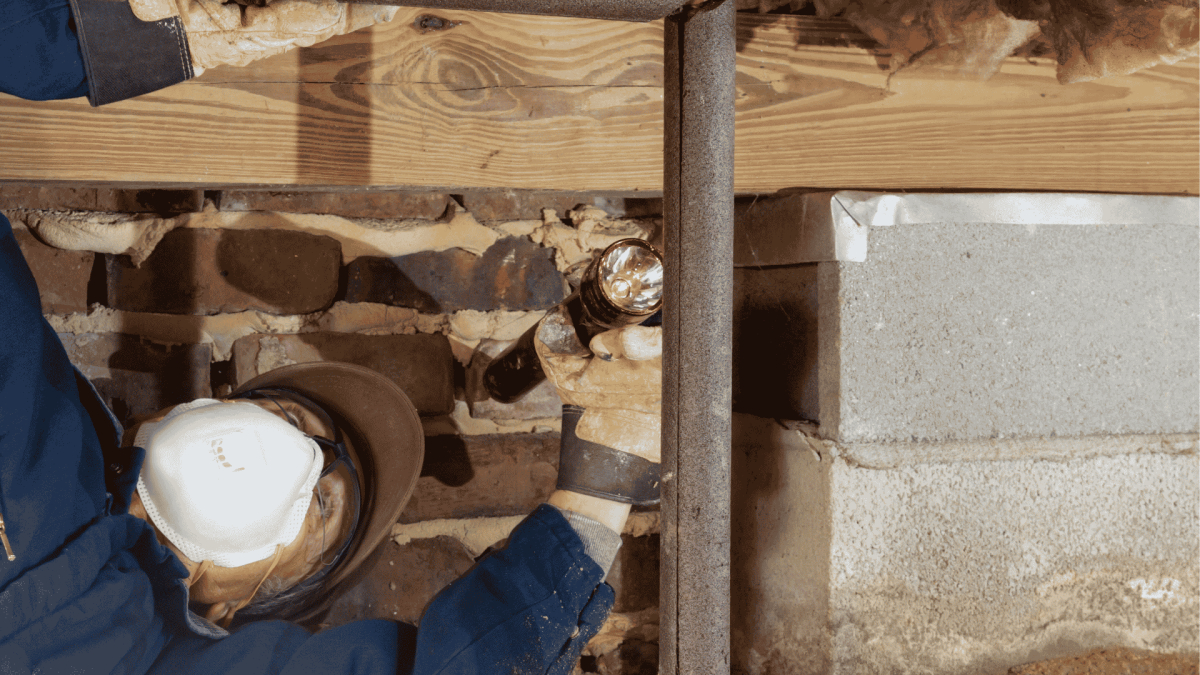
Burlington sits along the Haw River watershed, and that geography shapes more than the city's scenery. Alamance County's clay-heavy piedmont soils retain moisture exceptionally well, and the combination of seasonal rainfall, high summer humidity, and ground saturation that does not drain quickly creates a crawl space environment that works against homeowners throughout the year. For homes built with crawl space foundations, which represents a significant portion of Burlington's housing stock, that moisture finds its way up into the structure unless it is actively managed.
Crawl space encapsulation is the most comprehensive solution available for Burlington homes dealing with persistent moisture problems. Neuse Termite and Pest Control serves Burlington from our Alamance County location at 3671 Alamance Rd, bringing moisture control expertise backed by a 5-star rating from over 2,000 customers and more than 320 years of combined experience across Central NC.
Why Burlington Crawl Spaces Struggle with Moisture
Several factors specific to Alamance County and Burlington's housing stock make crawl space moisture a near-universal issue for homes with a crawl space foundation.
Clay soils and the Haw River watershed:
Burlington's underlying clay geology retains water far longer than sandy coastal soils. After rain events, that saturation persists for days, releasing ground vapor continuously into unprotected crawl spaces through a process called soil vapor emission. Homes closer to the Haw River, Alamance Creek, and their tributaries see this effect most acutely.
Older housing construction:
Much of Burlington's established residential inventory dates to the 1940s through 1970s. These homes frequently feature:
- Minimal or no vapor barrier installed on the crawl space floor
- Limited clearance between the soil and floor framing
- Original foundation vents that admit humid outdoor air throughout the summer months
- Wood framing that has been exposed to moisture conditions for decades
Newer development drainage:
Homes built on Burlington's expanding edges often sit on recently graded lots where drainage patterns are still settling. Construction grading can inadvertently direct water toward the foundation, and fresh landscaping with mulch against the foundation wall adds both moisture retention and organic material close to the structure.
The crawl space vent problem:
Traditional foundation vents were designed to promote airflow and drying. In North Carolina's climate, they frequently do the opposite. During humid summer months, warm outdoor air with high relative humidity enters the crawl space and condenses on the cooler surfaces inside. The space becomes wetter from the vents, not drier. Encapsulation addresses this directly.
What Full Crawl Space Encapsulation Includes
A complete encapsulation system transforms the crawl space from an uncontrolled, moisture-prone environment into a sealed, actively managed one.
Heavy-Duty Vapor Barrier
A reinforced liner covers the entire crawl space floor and extends up the foundation walls and over all piers. This is the primary barrier against ground vapor, blocking soil moisture from rising into the space.
Termite-Resistant Insulation Board
Rigid insulation board is installed on the crawl space walls on top of the vapor barrier. It provides thermal separation from the exterior foundation wall using materials that do not harbor or attract termites.
Sealed Foundation Vents
All existing vents to the outside are sealed as part of the encapsulation process, eliminating the primary pathway for humid outdoor air to enter.
Required Dehumidifier
Sealing the foundation vents creates a closed crawl space, and building code requires a mechanical source of circulating air in that condition. A crawl space-rated dehumidifier is that required component. It actively maintains relative humidity at safe levels year-round. This is not an optional add-on; it is a built-in requirement of full encapsulation. Learn more about Neuse's crawl space dehumidification services.
Drainage Systems Where Needed
For Burlington homes with standing water or active water intrusion, a sump pump or interior drainage system is incorporated before the barrier is installed. Encapsulating over an unresolved water source is not effective and not how Neuse works.
Benefect Application
Where mold or fungal growth has developed, Neuse applies Benefect, a hospital-grade disinfectant, to crawl space surfaces before encapsulation materials are installed.
The Crawl Space and Pest Connection in Burlington
Moisture and termite pressure are closely related in Alamance County, and the crawl space is where that relationship is most direct. Moisture-damaged wood is a primary attractant for subterranean termites, and damp crawl spaces also draw wood-destroying beetles, centipedes, and rodents. Resolving crawl space moisture reduces the conditions that attract pest activity toward your structure.
For Burlington homeowners dealing with both concerns, Neuse can address moisture and termite protection through a single service relationship.
Signs Your Burlington Home May Need Encapsulation
- Persistent musty or earthy odors on the first floor
- Flooring that is buckling, cupping, or feels soft underfoot
- Elevated indoor humidity even during dry weather
- Worsening allergy or respiratory symptoms without another cause
- Visible mold or discoloration on lower walls or baseboards
- Higher-than-expected energy bills
- Visible moisture, standing water, or wood deterioration in the crawl space
Frequently Asked Questions About Crawl Space Encapsulation in Burlington
Can I just get a dehumidifier instead of full encapsulation?
Yes, and sometimes it is the right first step. A crawl space dehumidifier actively pulls excess moisture out of wood that has already absorbed it, which is something a vapor barrier alone cannot do. If your floor joists already have elevated moisture content, a dehumidifier may be the most direct immediate solution. Some Burlington homes benefit from a dehumidifier alone; others need both a dehumidifier and full encapsulation for lasting results. The inspection determines which approach your specific home needs. See our dehumidification services page for more on how we make that determination.
Is a dehumidifier required with full encapsulation?
Yes. When foundation vents are sealed, building code requires a mechanical source of circulating air. A crawl space-rated dehumidifier fulfills that requirement and is a built-in component of any complete encapsulation system, not an upgrade.
How long does installation take?
Most Burlington crawl spaces are encapsulated in one to two days depending on size and conditions. Your inspection will include a specific timeline estimate before any commitment is made.
Will encapsulation help with my energy costs?
Often, yes. A damp, unmanaged crawl space places additional humidity load on your HVAC system. Sealing and conditioning the space reduces that burden and can produce measurable improvement in heating and cooling efficiency.
How does Neuse serve Burlington for moisture control?
Our Burlington location at 3671 Alamance Rd serves all of Alamance County. Contact us to schedule a crawl space inspection and get a clear, no-obligation assessment of what your home needs.
Schedule Crawl Space Encapsulation in Burlington, NC
Neuse Termite and Pest Control is now serving Burlington homeowners directly from our Alamance County location. Contact us today to schedule your crawl space inspection.

