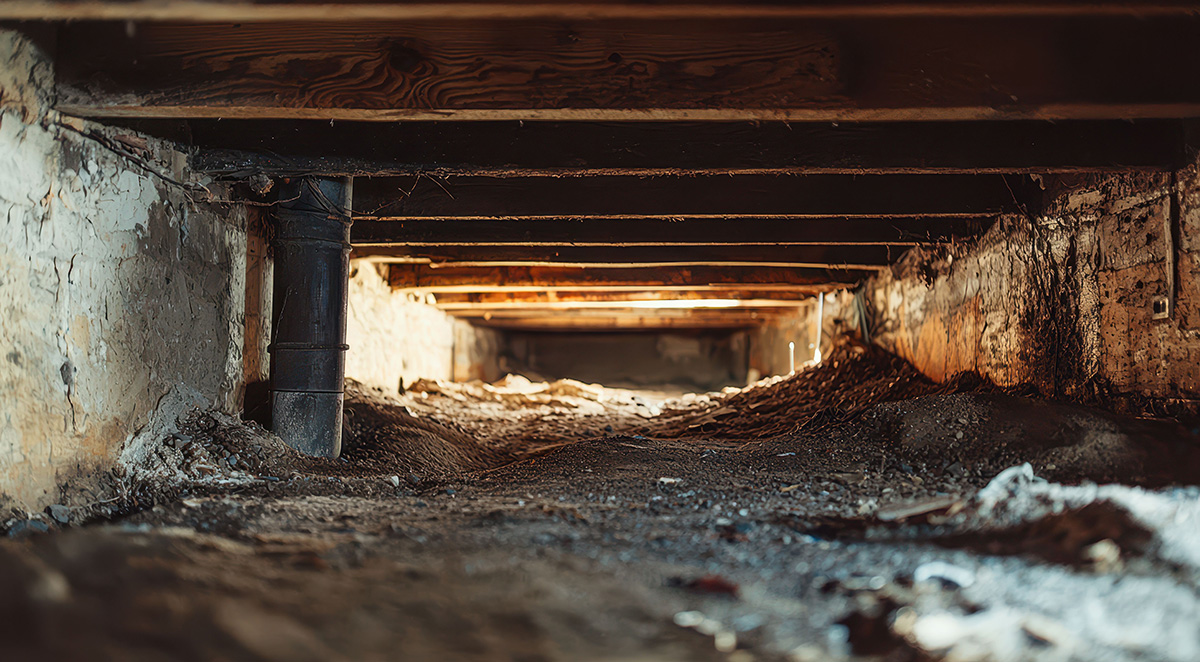
North Carolina's warm, humid weather is wonderful for long growing seasons and mild winters, but it is hard on the one part of your home you almost never see. The crawl space beneath your floors collects moisture year round, and that dampness quietly creates the exact conditions pests are searching for. Learning how crawl space moisture attracts pests is the first step toward keeping bugs out of your home for good.
Most homeowners think about pest control at the surface: a line of ants on the counter, a spider in the corner, a mosquito at dusk. The real story often starts below the floor. A damp crawl space gives insects and rodents the water, shelter, and softened wood they need to move in and multiply. Solve the moisture problem, and you remove the welcome mat.
Quick Summary
- North Carolina's humidity keeps many crawl spaces damp for most of the year, which draws in moisture-seeking pests.
- Termites, carpenter ants, cockroaches, and rodents are all attracted to the water, warmth, and decaying wood a wet crawl space provides.
- Warning signs include musty odors, sagging insulation, buckling floors, and condensation on ductwork or pipes.
- Controlling moisture through encapsulation, dehumidification, and drainage is the most effective long-term form of crawl space pest control.
- A combined moisture and pest strategy protects both your home's structure and your family's comfort.
Why North Carolina Crawl Spaces Stay Damp
Crawl spaces in our region face a constant supply of moisture from several directions at once. Groundwater rises through bare soil, humid outside air drifts in through foundation vents, and seasonal rain finds its way past gutters and grading that no longer drain the way they should. Add our long, sticky summers, and the space under your home can hold damp air for months at a time.
Traditional vented crawl spaces were designed to let outside air circulate and dry things out. In a humid climate like Central North Carolina, that theory often backfires. Warm, moisture-laden air enters the cooler crawl space and condenses on framing, ductwork, and insulation, leaving surfaces wet enough to support mold, wood decay, and a steady population of pests.
Once that cycle starts, it tends to feed itself. Damp wood holds more moisture, decaying wood attracts insects, and the insects open the door to the rodents and predators that follow them. The result is a small ecosystem operating just a few feet below your living room.
The Moisture and Pest Connection
Water is the single resource almost every household pest needs to survive. A crawl space that stays damp offers an endless supply, along with darkness and protection from the weather. That combination explains why so many infestations trace back to conditions under the floor.
Subterranean Termites
Subterranean termites are the most serious moisture-driven threat to North Carolina homes. They live in the soil, travel through mud tubes, and depend on consistent moisture to survive. A damp crawl space with wood in contact with wet soil is close to ideal habitat for them, and they can feed on structural timbers for a long time before anyone notices.
This is where prevention pays for itself. Neuse treats termites with liquid Termidor rather than bait-only systems, creating a continuous treated zone around the structure. Every treatment is also backed by a $1,000,000 damage repair guarantee, which protects homeowners against the kind of costly structural damage that standard insurance policies typically exclude. You can learn more on our termite treatment page.
Carpenter Ants
Carpenter ants are widely misunderstood. They do not eat wood the way termites do, and they rarely show up in a healthy, dry home. Instead, they hollow out wood that has already been softened by moisture, which makes them a symptom of a water problem more than a pest problem on their own.
When carpenter ants appear, the lasting fix is to address the moisture-damaged wood and the dampness that weakened it in the first place. Treating the visible ants without correcting the conditions usually leads to their return. Our ant control service works alongside moisture correction so the underlying issue gets resolved.
Cockroaches and Other Insects
Cockroaches, silverfish, and springtails are drawn to humidity and thrive in the damp dark of a neglected crawl space. From there they migrate upward into kitchens, bathrooms, and utility areas through gaps around pipes and wiring. A crawl space that stays dry is far less hospitable to them.
Rodents
Mice and rats look for the same things insects do: water, warmth, and shelter. A moist crawl space provides all three, and rodents will nest in damp insulation and travel along pipes and joists to reach the rest of the house. Reducing moisture removes one of the main reasons they settle in.
Warning Signs of a Moisture-Driven Pest Problem
You do not have to climb under the house to spot trouble. Several signals inside your home point to excess moisture below the floor:
- A musty or earthy smell that lingers in lower rooms
- Insulation that sags, darkens, or falls away from the subfloor
- Floors that feel soft, cup, or buckle over time
- Condensation on ducts, pipes, or crawl space vents
- Recurring pest activity that returns no matter how often you treat the living areas
When two or more of these appear together, moisture is usually the common thread. Treating the pests alone will not hold if the dampness remains.
How to Break the Moisture and Pest Cycle
The most reliable crawl space pest control is moisture control. When you take away the water, you take away the reason pests gather under your home. A complete approach usually combines several steps that work together.
Dehumidification
A dehumidifier is often the right first step. It pulls excess moisture out of the air and keeps the space at a stable, dry level year round. When a crawl space is fully encapsulated and the foundation vents are sealed, building code requires a dehumidifier or another conditioning method to manage humidity in the now-closed space. You can read more about this on our dehumidification page.
Full Encapsulation
Full encapsulation seals the crawl space from the ground and outside air. A heavy vapor barrier covers the soil and walls, and termite-resistant insulation board is installed over the vapor barrier on the crawl space walls to add thermal protection without giving pests an easy path. Sealing the space this way keeps humid air out and makes the area far less attractive to insects and rodents alike. Our blog on how proper crawl space encapsulation prevents pest infestations walks through the process in detail.
Drainage and Grading
Drainage and grading matter too. Clean, functioning gutters and proper slope keep rainwater away from the foundation before it can reach the crawl space. Pairing exterior water management with interior moisture control gives you the most durable result. For ongoing protection, many homeowners combine these fixes with a home protection plan that keeps pests in check season after season.
When to Call a Professional
A flashlight inspection can reveal obvious problems, but the full picture usually requires trained eyes. Moisture damage, early termite activity, and the start of an infestation are easy to miss and expensive to ignore. With more than 320 years of combined team experience, our technicians can identify the source of the moisture, assess any pest pressure, and recommend the right combination of services for your home.
If you have noticed any of the warning signs above, the safest move is a professional evaluation before small issues become structural ones. Reach our team through our contact page to schedule a visit.
Frequently Asked Questions
Can a damp crawl space really cause pests inside my home?
Yes. A damp crawl space supplies the water, shelter, and softened wood that pests need, and many infestations that appear in living areas actually originate below the floor. Insects and rodents travel upward through gaps around pipes, wiring, and floor penetrations.
Will sealing my crawl space stop pests on its own?
Encapsulation removes the moisture and the access points that pests rely on, which dramatically reduces the conditions they need. For an active infestation, it works best alongside targeted pest control so existing populations are eliminated while future ones are prevented.
Do I need a dehumidifier if my crawl space is encapsulated?
In most cases, yes. Once the vents are sealed, the space no longer breathes, so a dehumidifier or similar system is required by code to manage humidity and keep the area dry. It is the piece that keeps an encapsulated crawl space performing the way it should.
How do I know if the moisture is coming from the crawl space?
Common clues include musty odors in lower rooms, sagging or discolored insulation, soft or buckling floors, and condensation on ducts and pipes. A professional moisture inspection can confirm the source and measure humidity levels directly.
Is crawl space moisture damage covered by homeowners insurance?
Most policies do not cover gradual moisture damage or the pest damage that follows, since they treat these as preventable maintenance issues. That is one reason proactive moisture and pest control is so valuable for protecting your investment.
Protect Your Home From the Ground Up
The pests you see inside are often a message from the space you cannot see. By treating crawl space moisture as the root cause, you address the reason bugs and rodents keep coming back rather than chasing them one at a time. A dry, sealed, well-drained crawl space is one of the strongest defenses a North Carolina home can have.
Neuse Termite and Pest Control brings moisture control and pest control together so your home is protected at the source. If you are ready to break the moisture and pest cycle for good, contact us to schedule your inspection.

